
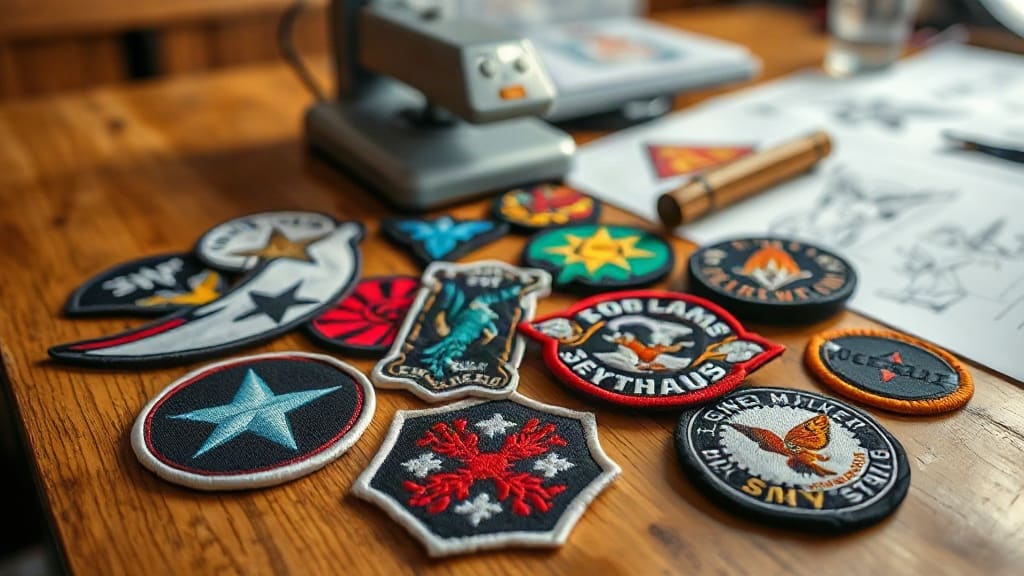
In the world of custom patches, innovation often comes from unexpected places. One such innovation is the rise of smart blanks, a game-changing approach that combines the efficiency of pre-made bases with the limitless potential of digital design. Whether you're a small business owner looking to create branded merchandise or an individual planning a special event, understanding smart blanks can unlock new levels of creativity and cost-effectiveness.
What Are Smart Blanks?
At their core, smart blanks are pre-manufactured patch bases that are ready to be customized with your unique artwork. Unlike traditional patches that are embroidered from scratch, smart blanks allow for the application of designs through various techniques such as printing, heat transfer, or even digital embroidery. This hybrid approach offers the best of both worlds: the durability and texture of a woven or embroidered patch, combined with the precision and color range of modern printing methods.
The term "smart" refers to the adaptability of these blanks. They come in standard shapes and sizes, but their true intelligence lies in how they can be personalized without the extensive setup costs and lead times associated with fully custom manufacturing. This makes them ideal for small batches, prototypes, or even large-scale production where consistency is key.
Why Smart Blanks Are Gaining Popularity
The surge in popularity of smart blanks can be attributed to several factors. First, the demand for personalized products has never been higher. Consumers and businesses alike want items that reflect their identity, and patches are a versatile medium for self-expression. Second, advancements in printing technology have made it possible to achieve photo-realistic designs on fabric, something that was once impossible with traditional embroidery.
Another driver is the need for speed. In today's fast-paced market, waiting weeks for custom patches is no longer acceptable. Smart blanks can be customized and shipped within days, allowing brands to capitalize on trends and events in real time. Additionally, the cost savings are significant. By eliminating the need for digitizing and extensive embroidery programming, smart blanks reduce the barrier to entry for custom patches.
Design Freedom and Customization
One of the most compelling aspects of smart blanks is the design freedom they offer. With traditional embroidery, complex gradients, fine details, and photographs are challenging and often require compromises. Smart blanks, however, can accommodate any design that can be printed, including full-color images, subtle shading, and even metallic or glow-in-the-dark effects. This opens up possibilities for artists, photographers, and designers who want to translate their work onto patches without losing fidelity.
Moreover, smart blanks can be produced in a variety of base materials, such as twill, felt, or canvas, each providing a different texture and feel. This allows for further customization to match the intended use, whether it's for a rugged outdoor jacket or a delicate fashion accessory.
Cost-Effectiveness for Small Businesses
For small businesses, every dollar counts. Smart blanks offer a cost-effective way to create professional-looking patches without investing in expensive embroidery machines or hiring specialized staff. The ability to order small quantities means less inventory risk and more flexibility to test different designs. Many suppliers, like smart blanks from embpatchesusa.com, provide online design tools that make the process even more accessible, allowing anyone to upload artwork and see a digital proof before ordering.
Furthermore, the durability of smart blanks is comparable to traditional patches. The printing techniques used are designed to withstand washing and wear, ensuring that your branding remains intact over time. This makes them suitable for uniforms, promotional items, and merchandise that will see regular use.
How to Use Smart Blanks for Your Next Project
Getting started with smart blanks is straightforward. Here's a step-by-step guide to help you navigate the process:
- Define Your Purpose: Determine where the patches will be used. Will they be sewn onto jackets, hats, or bags? This will influence the size, shape, and base material you choose.
- Create Your Design: Work with a graphic designer or use online tools to create your artwork. Ensure it's high resolution and in a suitable file format (e.g., PNG, vector). Remember that the design will be printed, so colors may appear slightly different than on screen.
- Select Your Blanks: Choose from a variety of pre-made bases. Consider the color of the base, as it will affect the final look of your design. For example, a white base will make colors pop, while a black base can create a more subdued effect.
- Choose a Customization Method: Decide between heat transfer, direct-to-film printing, or other techniques. Each has its own advantages in terms of durability, feel, and cost.
- Place Your Order: Upload your design to a reputable supplier and specify the quantity. Most suppliers will provide a digital proof for approval before production.
- Apply and Enjoy: Once you receive your patches, apply them using a heat press or sewing machine, depending on the backing. Then showcase your custom creation to the world.
Common Mistakes to Avoid
While smart blanks are forgiving, there are pitfalls to watch out for. First, neglecting to consider the base color can lead to disappointing results. If your design has white elements and you choose a white base, they may blend in. Always check a proof. Second, using low-resolution images will result in pixelated patches; always start with high-quality artwork. Third, not testing the application method can lead to patches falling off. Practice on a similar fabric before committing to your final garment.
Another mistake is overlooking the importance of the backing. Smart blanks can come with different backings, such as iron-on, sew-on, or adhesive. Choose the one that best suits your fabric and intended use. For example, iron-on is convenient but may not hold up well on nylon or waterproof materials, where sewing is preferred.
Future Trends in Smart Blanks
The future of smart blanks is bright, with ongoing advancements in printing technology and materials. We can expect to see even more intricate designs, eco-friendly options, and perhaps interactive elements like NFC chips embedded in patches. As the line between digital and physical continues to blur, smart blanks will likely play a pivotal role in how we personalize our belongings.
For now, they offer a practical and creative solution for anyone looking to add a professional touch to their apparel or accessories. Whether you're a hobbyist or a business, exploring smart blanks could be the key to unlocking your next big idea.
Frequently Asked Questions About Smart Blanks
What exactly are smart blanks and how do they differ from traditional patches?
Smart blanks are pre-made patch bases that are customized with your design using printing techniques, whereas traditional patches are typically embroidered from scratch. This means smart blanks offer faster turnaround, lower costs for small orders, and the ability to reproduce complex designs with fine details and gradients that embroidery cannot easily achieve.
Can I order just a few smart blanks or is there a minimum quantity?
Most suppliers of smart blanks have low minimum order quantities, often as few as one. This makes them perfect for prototypes, small businesses, or individual projects. However, ordering in larger quantities usually reduces the per-unit cost, so consider your needs and budget.
How durable are smart blanks compared to embroidered patches?
When properly applied and cared for, smart blanks are very durable. The printing methods used are designed to withstand regular washing and wear. However, they may not be as abrasion-resistant as dense embroidery, so for heavy-duty applications, embroidery might still be preferred. Always follow the care instructions provided by the supplier.
What file format should I use for my design?
Vector files (like .AI or .EPS) are ideal because they can be scaled without losing quality. If you have a raster image, ensure it's at least 300 DPI at the final print size. PNG files with transparent backgrounds are also acceptable for many printing methods.
Can smart blanks be applied to any fabric?
Smart blanks can be applied to most fabrics, but the method of application matters. Iron-on patches work well on cotton and canvas but may not adhere to nylon or waterproof materials. For those, sewing is recommended. Always test on a small area first.